
10 Cruise Expenses That Are NOT Worth It (Real Advice From a Frequent Cruiser)
Cruise lines offer no shortage of ways to spend money once you’re onboard.
Some of those extras can genuinely improve the experience. Others can end up costing far more than they’re worth.
After years of cruising, I’ve learned that the difference isn’t usually about price—it’s about value. An expensive purchase can be completely worth it if you use it, while a relatively small expense can feel like a waste if it doesn’t improve your vacation.
That’s why I don’t think the goal is to spend as little as possible. The goal is to spend your money where it will make the biggest difference.
Here are ten cruise expenses that, in my experience, are often easier to skip than many first-time cruisers realize.
1. Art Auctions (Fun to Watch, Harder to Justify)
Cruise ship art auctions have been around for years, and I’ll admit they’re entertaining.
There’s usually a lively atmosphere, free champagne, enthusiastic auctioneers, and plenty of excitement in the room. Even if you have no intention of buying anything, attending one can be a fun way to spend an hour at sea.
The problem is that excitement can sometimes make people feel like they’re getting a better deal than they actually are.
Most of the artwork sold onboard consists of limited-edition prints, reproductions, or pieces that can often be found elsewhere for similar—or sometimes lower—prices. Unless you already understand the artist, the market, and the value of the piece you’re considering, it can be difficult to know whether you’re truly getting a bargain.
I’ve attended a few art auctions over the years and always enjoyed watching them, but I’ve never felt compelled to make a purchase.
My advice?
Enjoy the free champagne.
Enjoy the show.
But do your research before raising your paddle.
Bottom line: Great entertainment. Not always the best place to make an impulse purchase.

2. Priority Boarding (Less Valuable Than It Sounds)
I completely understand why this one is popular.
When you’re excited about your cruise, the idea of skipping lines and getting onboard faster sounds like an easy win.
But after many cruises, I’ve found that priority boarding usually makes far less difference than people expect.
Most cruise lines already assign staggered arrival times, and if you check in as soon as online check-in opens, you’ll often receive one of the earlier boarding windows anyway. On many of my sailings, the boarding process moved quickly enough that paying extra wouldn’t have noticeably changed the experience. I’ve personally never purchased priority boarding, and always boarded before noon (but one time).
In fact, the longest delays I’ve experienced weren’t caused by waiting in line at the terminal. They were caused by factors nobody could control, such as customs inspections, delayed ship clearance, you can read more about it on our Margaritaville of the Seas review.
That’s not to say priority boarding is never worth it.
Families with young children, travelers who value every minute onboard, or cruisers who receive additional benefits as part of the package may find value in it.
For most cruisers, though, it’s difficult to justify spending an extra $80–$180 simply to board a little earlier.
Bottom line: Nice to have, but for most people it won’t meaningfully change the cruise experience.
3. Specialty Dining Packages (Too Much of a Good Thing)
I enjoy specialty restaurants on cruise ships.
Some of my favorite cruise meals have come from places like Chops Grille, Hooked Seafood, Cagney’s, and other specialty venues across different cruise lines.
But after trying specialty dining packages, I’ve realized they’re not always the best value for the average cruiser.
The appeal is obvious. The package lowers the cost per meal and encourages you to try several restaurants during the cruise. On paper, it can look like a great deal.
The reality is that it also commits you to multiple reservations.
That means planning your evenings around restaurant schedules, potentially rushing back from port days, and sometimes eating at venues you weren’t particularly excited about in the first place.
I’ve experienced this firsthand. On one cruise, we booked multiple specialty restaurants because the package made it seem like a bargain. While some meals were excellent, others didn’t impress us nearly as much. My mom, in particular, enjoyed some restaurants far more than others, which made us realize we would have been happier choosing only our favorites.
Another thing many first-time cruisers overlook is that cruise ships already include a lot of food. Main dining rooms, buffets, quick-service venues, and other complimentary options can provide plenty of variety without spending extra.
These days, I usually prefer to book one or two specialty restaurants that I genuinely want to try rather than purchasing a package simply because it appears to save money.
Bottom line: A couple of carefully chosen specialty meals often provide more value than committing to a full dining package.

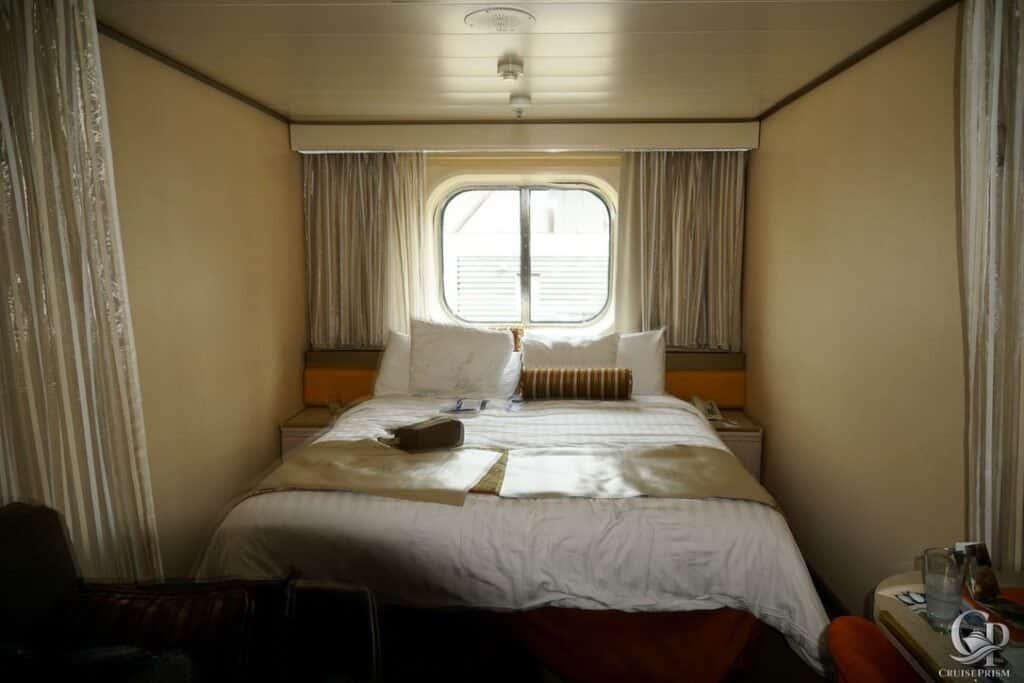
4. Ocean View Cabins (The Cabin Category I Struggle to Recommend)
This is probably my most unpopular cruise opinion.
For many cruises, I find ocean view cabins stuck in an awkward middle ground between inside cabins and balconies.
An inside cabin is usually the cheapest option onboard. If your goal is maximizing value and you don’t spend much time in the room, it makes perfect sense.
A balcony, on the other hand, gives you something that genuinely changes the experience. You get private outdoor space, fresh air, ocean views, and a quiet place to relax away from the crowds.
Ocean view cabins often cost noticeably more than an inside cabin, yet they don’t provide many of the benefits that make balconies special.
Yes, having natural light is nice.
Yes, waking up and seeing the ocean can be enjoyable.
But on most cruises, I find that I’m either out exploring the ship or relaxing on my balcony. I rarely spend enough time looking through the window to justify the extra cost.
That doesn’t mean ocean view cabins are a bad choice for everyone. Some cruisers dislike inside cabins and don’t want to pay balcony prices. In that situation, an ocean view can be a reasonable compromise.
For me, though, the math rarely works.
If I’m trying to save money, I’ll usually book an inside cabin. If I want a more enjoyable cabin experience, I’ll spend the extra money for a balcony.
Bottom line: Ocean view cabins aren’t bad, but they often feel like a compromise that costs more than it’s worth.
5. Cruise Line Shore Excursions (Convenient, But Not Always the Best Value)
I’ve booked both cruise-line excursions and independent tours over the years, and one thing I’ve noticed is that the experiences are often more similar than many cruisers realize.
In a lot of ports, the cruise line and the independent operators are taking guests to the exact same beaches, attractions, and landmarks. The difference is usually the price.
I’ve frequently found independent tours offering nearly identical itineraries for noticeably less money than the cruise line’s version.
Of course, cruise line excursions do come with a major advantage.
If the tour runs late, the ship is responsible for getting you back onboard. That peace of mind can be valuable, especially in unfamiliar destinations or ports where transportation is less reliable.
But in many Caribbean ports, I’ve found reputable local operators with excellent reviews, smaller groups, and lower prices. Sometimes the experience was actually better because the tours felt more personal and less crowded.
When I book independently, I stick with established companies, read recent reviews carefully, and leave plenty of buffer time before all-aboard.
For many itineraries, that extra research can save a significant amount of money without sacrificing the experience.
Bottom line: Cruise line excursions offer convenience and peace of mind, but they’re often not the only—or best—option available.
6. Room Service (Not as Special as It Used to Be)
There was a time when room service felt like one of the great perks of cruising.
Ordering breakfast to your cabin, enjoying a late-night snack, or eating on your balcony without leaving the room felt like part of the vacation experience.
Today, though, many cruise lines have changed the equation.
What was once included is now often accompanied by delivery fees, service charges, or limited menus. At the same time, ships have expanded their complimentary dining options, making it easier than ever to grab food without paying extra.
On most modern cruise ships, you’re rarely more than a few minutes away from a buffet, café, pizza venue, quick-service restaurant, or included dining room.
I’ve ordered room service on a few cruises, and while the convenience was nice, the food was usually less impressive than what I could find elsewhere onboard. More often than not, I found myself wishing I had simply walked to one of the ship’s dining venues instead.
There are still situations where room service makes sense. Breakfast on a balcony can be a wonderful experience, and it can be useful if you’re feeling under the weather or simply want a quiet morning in your cabin.
For most meals, however, I find it hard to justify paying extra when better food is often available elsewhere on the ship.
Bottom line: Room service can be convenient, but it’s rarely the best value given how much complimentary food is already available onboard.

7. Unlimited Drink Packages (Not the Automatic Bargain Many People Expect)
Few cruise purchases generate more debate than the drink package.
Some cruisers swear by them. Others avoid them completely.
The truth is that whether a drink package is worth it depends almost entirely on how you actually drink during a cruise.
Before my first few cruises, I assumed the package was an obvious money saver. After all, unlimited drinks sounds like a great deal.
But once you start looking at the math, the picture becomes less clear.
Most mainstream cruise lines charge somewhere between $60 and $90+ per person, per day for their alcoholic beverage packages. Depending on the cruise line and what’s included, you may need to consume six to eight alcoholic drinks every day just to break even.
And that’s every day of the cruise.
What many people don’t consider is how much their habits change once they’re onboard.
Port days can be long.
Excursions can start early.
Some evenings you may only have a drink or two.
Some days you may not drink at all.
I’ve cruised both ways—with a drink package and without one—and I’ve found that the value varies tremendously from one sailing to the next. On some cruises, especially sea-day-heavy itineraries, I can easily see how a package would make sense. On others, paying per drink would have been significantly cheaper.
For me, the package only becomes an easy decision when I know I’ll be drinking cocktails regularly throughout the day, enjoying specialty coffees, bottled water, sodas, and other included beverages.
Otherwise, it’s surprisingly easy to spend less by paying as you go.
Bottom line: Drink packages can offer excellent value, but only if your actual drinking habits justify the cost.

8. Cruise Line Travel Insurance (Convenient, But Not Always the Best Deal)
Travel insurance is one cruise expense I rarely skip.
What I do skip, however, is automatically purchasing the insurance offered by the cruise line.
Cruise lines make the process incredibly easy. You’re already booking your cruise, and with a single click you can add coverage and move on.
The convenience is appealing.
The problem is that convenience doesn’t always equal value.
Over the years, I’ve found that third-party travel insurance providers often offer more flexible policies, higher coverage limits, and competitive pricing compared to the plans sold directly by cruise lines.
Another advantage is that third-party policies typically cover your entire trip rather than just the cruise itself. That can include flights, hotels, transportation, baggage delays, medical emergencies, and other travel-related issues before you ever step onboard.
Whenever I’m considering travel insurance, I compare multiple options rather than automatically selecting the cruise line’s plan. It usually only takes a few minutes, and I’ve often found policies that provided broader coverage for a similar—or even lower—price.
That doesn’t mean cruise line insurance is a bad product.
For some travelers, especially those who value simplicity, it can be a perfectly reasonable choice. The key is making sure you’re comparing coverage rather than assuming the cruise line’s option is automatically the best one.
Bottom line: Travel insurance is important, but it’s worth shopping around before automatically selecting the cruise line’s plan.
9. Spa Treatments (Relaxing, But Hard to Justify at Full Price)
I’ll be the first to admit that cruise ship spas are impressive.
They’re usually some of the most beautiful spaces onboard, with calming music, ocean views, thermal suites, and an atmosphere designed to make you forget about everything happening outside.
The experience itself is rarely the problem.
The price is.
On most cruise lines, spa treatments cost significantly more than comparable services on land. A massage that might cost a certain amount at home can easily carry a substantial premium once you’re at sea.
I’ve experienced cruise spa treatments before, and I enjoyed them. The staff were professional, the facilities were excellent, and the experience felt luxurious.
What I struggled with was the value.
When I compare what the same amount of money could buy elsewhere during the cruise—a specialty dinner, an excursion, or even future cruise savings—it’s difficult for me to justify paying full price for a treatment.
That doesn’t mean you should avoid the spa entirely.
In fact, some of the best spa values can be found through embarkation-day specials, port-day discounts, package promotions, or thermal suite passes that provide access without paying for a full treatment.
Those options often deliver much of the relaxation without the steepest prices.
For me, the spa falls into the category of a nice luxury rather than an essential part of the cruise experience.
Bottom line: Cruise spas offer a wonderful experience, but paying full price is often harder to justify than taking advantage of the discounts that frequently become available.

10. Photo Packages (Harder to Justify Than They Used to Be)
There was a time when cruise photo packages made a lot of sense.
Professional photographers were often the easiest way to capture formal nights, family portraits, and special vacation memories.
Today, things are different.
Most of us carry surprisingly capable cameras in our pockets. Modern smartphones can take excellent photos in a wide variety of conditions, and they’re always available when a memorable moment happens.
That shift has made cruise photo packages harder for me to justify.
Every cruise still offers plenty of photo opportunities. You’ll find photographers stationed around the ship during embarkation, formal nights, port days, and dining experiences. Some of the photos turn out great.
Others don’t.
I’ve often found myself browsing through the photo gallery and realizing that while a few pictures looked nice, very few were special enough to justify purchasing an entire package.
For families celebrating major milestones, anniversaries, reunions, or once-in-a-lifetime trips, professional photos may absolutely be worth the expense. Having everyone together in a high-quality portrait can be something you’ll treasure for years.
For most cruises, though, I prefer a simpler approach.
I take plenty of my own photos throughout the trip and only consider purchasing a professional shot if there’s one image that truly stands out.
That way I’m paying for a memory I genuinely love rather than a package filled with photos I’ll rarely look at again.
Bottom line: Cruise photographers can capture some fantastic memories, but most cruisers don’t need a full photo package to preserve their vacation.
Final Verdict: Spend Smarter, Not Less
One of the things you’ll quickly learn about cruising is that the cruise fare is only the beginning.
From the moment you book until the day you disembark, you’ll be offered countless opportunities to spend more money. Some of those extras can genuinely improve your vacation. Others can leave you wondering why you paid for them in the first place.
After years of cruising, I’ve found that value isn’t determined by the price tag. It’s determined by whether the purchase actually improves your experience.
A balcony cabin that becomes your favorite place on the ship can be worth every penny.
A specialty restaurant that creates a memorable evening can be money well spent.
An excursion that becomes the highlight of your trip can easily justify its cost.
The problem is that many cruise upsells are marketed as necessities when they’re really optional conveniences.
That’s why I encourage first-time cruisers to be selective rather than automatically saying yes to every extra.
Not every item on this list is a bad purchase.
Priority boarding can be useful for some travelers.
Drink packages can offer excellent value for the right person.
Cruise line excursions provide peace of mind.
Spa treatments can be a wonderful vacation splurge.
The key is understanding your own travel style and spending money on the things you’ll genuinely use and enjoy.
For me, the best cruise vacations have never been the ones where I spent the most money.
They’ve been the ones where I spent money intentionally.
Because when you skip the extras that don’t matter to you, you have more room in the budget for the experiences that do.
And those are the memories you’ll actually remember long after the cruise is over.
Before You Book
If you’re planning your cruise, check out:
- Cruise menus and drink guides (what you’ll actually pay onboard)
- 10 of the biggest mistake first time cruisers make (Avoid these)
- Inside vs Ocean View vs Balcony cabin (Which Cabin is best for you)
- Our full cruise ship reviews (what the experience is really like onboard)