SS United States Gala Dinner Menus: A Look at Luxury Dining in the 1950s
Imagine crossing the Atlantic aboard the legendary SS United States in the 1950s, sitting down to an elaborate dinner featuring Beluga caviar, fresh lobster, roasted meats, French-inspired dishes, and desserts served in multiple courses.
These original SS United States dinner menus from February 4, 1955, and March 17, 1956, along with a vintage gala dinner cover, offer a fascinating glimpse into the golden age of ocean liner travel. They reveal not only what passengers could eat aboard America’s fastest ocean liner, but also how important fine dining was to the transatlantic experience.
The SS United States: America’s Legendary Transatlantic Ocean Liner
Launched in 1952, the SS United States was designed by naval architect William Francis Gibbs and operated by United States Lines. She was built to transport passengers across the Atlantic at remarkable speeds while offering the comfort and sophistication associated with luxury ocean travel.
During her maiden voyage in July 1952, she captured the Blue Riband for the fastest transatlantic crossing by a passenger liner, establishing a record that remains one of her greatest achievements.
But speed was only part of her appeal.
The ship accommodated nearly 2,000 passengers across First Class, Cabin Class, and Tourist Class. Each class had its own dining room, and food was an essential part of the onboard experience.
Unlike today’s cruise ships, where passengers often choose between numerous specialty restaurants, the SS United States offered an extensive selection of dishes through traditional ocean liner dining service.
The following original menus show just how elaborate those meals could be.
Original SS United States Gala Dinner Menu Cover
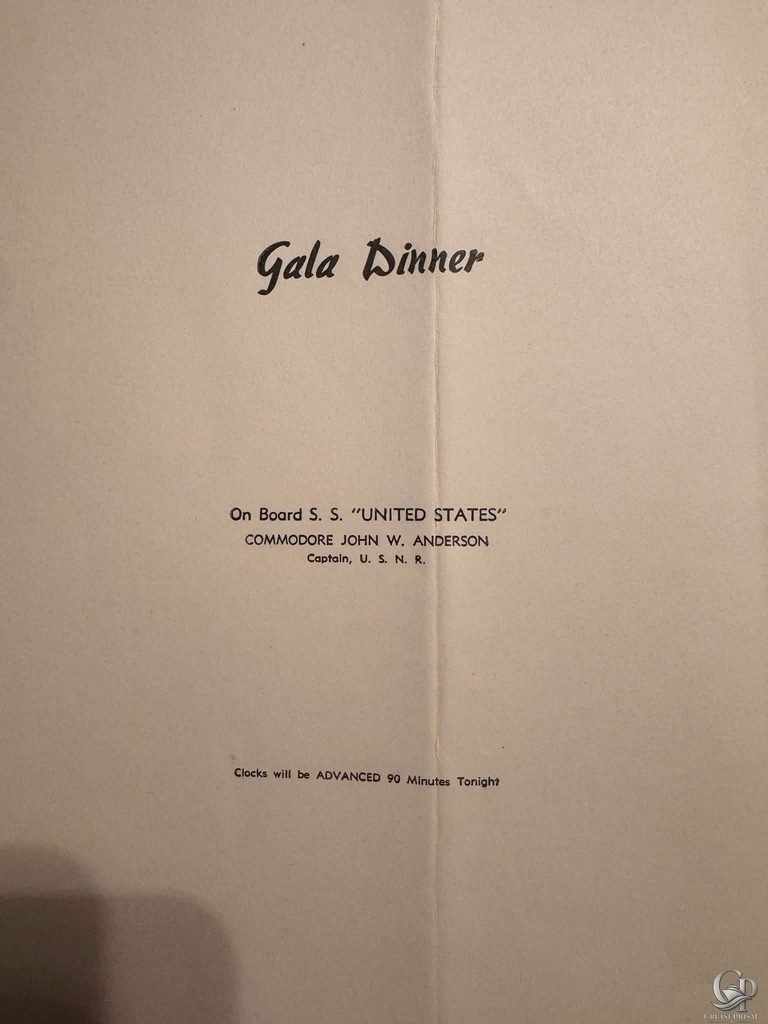
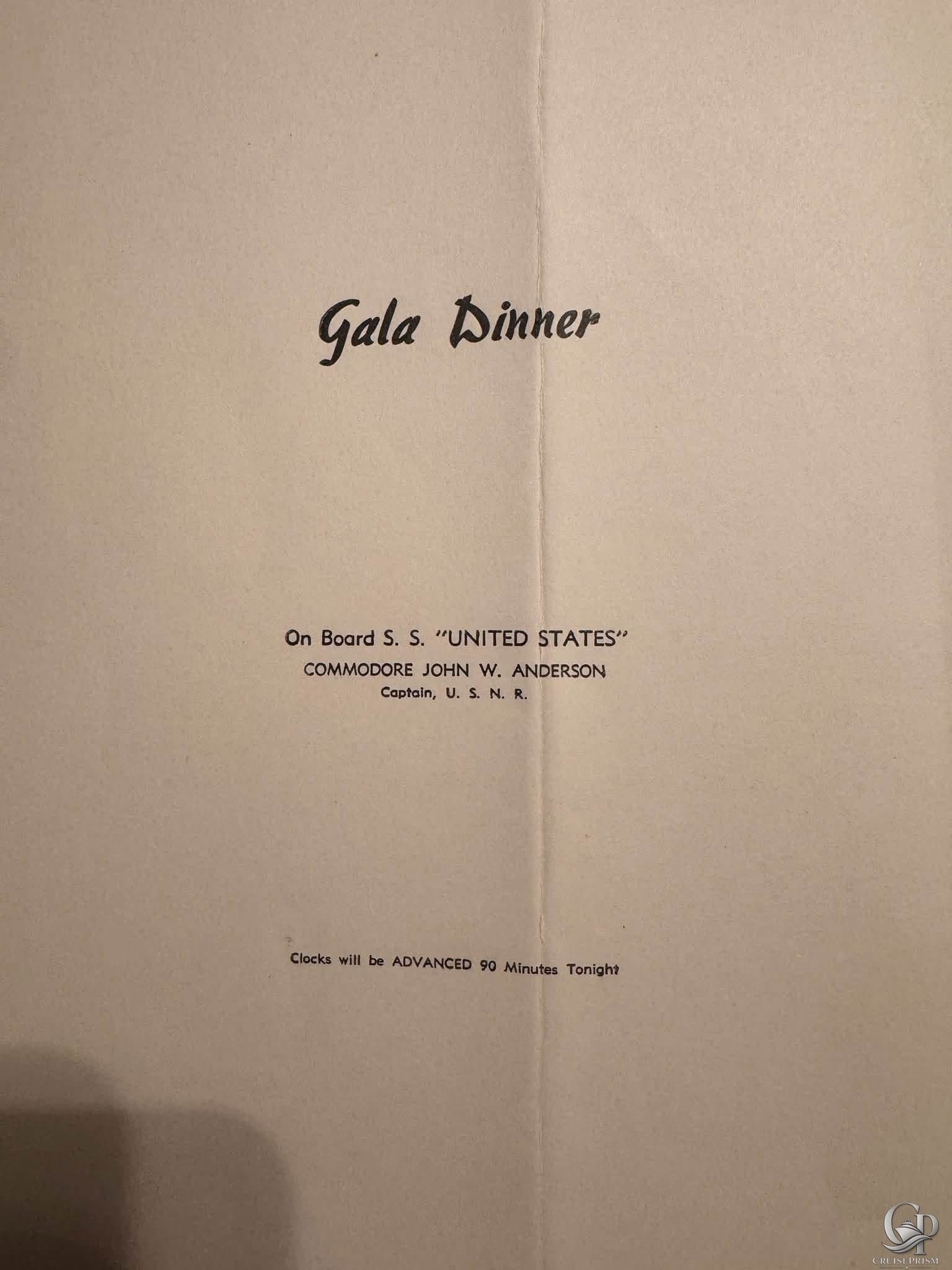
The first photograph features an elegant gala dinner menu cover from the SS United States.
Its understated design includes the words “Gala Dinner” and identifies Commodore John W. Anderson, one of the ship’s most important early commanders.
At the bottom is a particularly interesting instruction:
“Clocks will be ADVANCED 90 Minutes Tonight”
During eastbound Atlantic crossings, passengers adjusted their clocks as the ship traveled through different time zones. This allowed them to gradually transition toward European time.
The cover itself does not display a date. However, it provides a wonderful example of the printed materials passengers encountered during a transatlantic voyage.
Gala dinners were special occasions aboard the ship, typically associated with the final evening at sea. Passengers dressed elegantly, and the celebration included festive decorations and special dining arrangements.
These printed menus often became treasured souvenirs.
SS United States Gala Dinner Menu – March 17, 1956
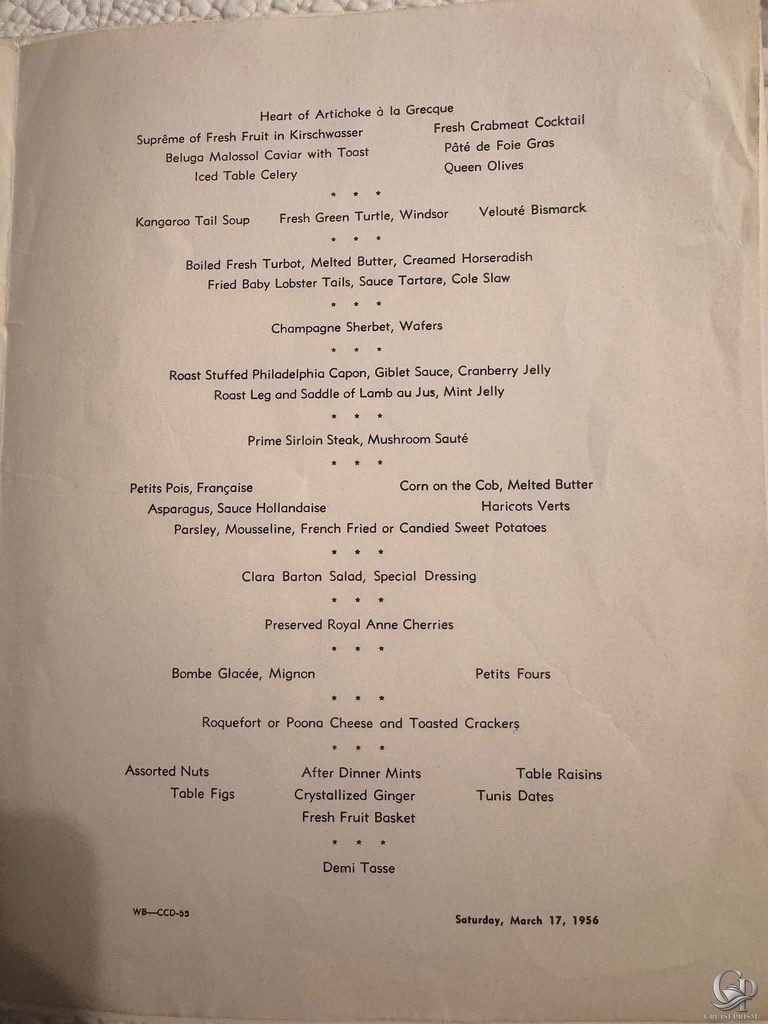
The second photograph shows a beautifully preserved dinner menu dated Saturday, March 17, 1956.
What immediately stands out is the extraordinary variety of food available.
Rather than presenting just a few appetizers and main courses, the menu offers an extensive selection of seafood, soups, meats, vegetables, desserts, and after-dinner refreshments.
Appetizers and Soups
Among the opening selections were:
- Heart of Artichoke à la Grecque
- Beluga Malossol Caviar with Toast
- Fresh Crabmeat Cocktail
- Pâté de Foie Gras
- Kangaroo Tail Soup
- Fresh Green Turtle Soup, Windsor
- Velouté Bismarck
The inclusion of kangaroo tail soup and green turtle soup is particularly remarkable by modern standards.
Both were associated with the ship’s historic dining traditions. According to the SS United States Conservancy, kangaroo tails were imported frozen from New Zealand, while green turtle soup was prepared using fresh turtle.
Seafood and Main Courses
The menu continued with an impressive selection of seafood and meats:
- Boiled Fresh Turbot with Melted Butter and Creamed Horseradish
- Fried Baby Lobster Tails with Sauce Tartare
- Roast Stuffed Philadelphia Capon with Cranberry Jelly
- Roast Leg and Saddle of Lamb au Jus
- Prime Sirloin Steak with Mushroom Sauté
These dishes reflect the French and American culinary influences that characterized luxury ocean liner dining during the 1950s.
Between courses, passengers could enjoy champagne sherbet, a traditional palate refresher.
Vegetables, Desserts, and After-Dinner Selections
The menu also offered numerous accompaniments, including asparagus with hollandaise sauce, French-style peas, corn on the cob, and several potato preparations.
Dessert selections were equally extensive:
- Preserved Royal Anne Cherries
- Bombe Glacée Mignon
- Petits Fours
- Roquefort or Poona Cheese with Toasted Crackers
- Assorted Nuts and Table Figs
- Crystallized Ginger and Tunis Dates
- Fresh Fruit Basket
The meal concluded with demi-tasse, a small serving of coffee traditionally offered after an elaborate dinner.
SS United States Gala Dinner Menu – February 4, 1955
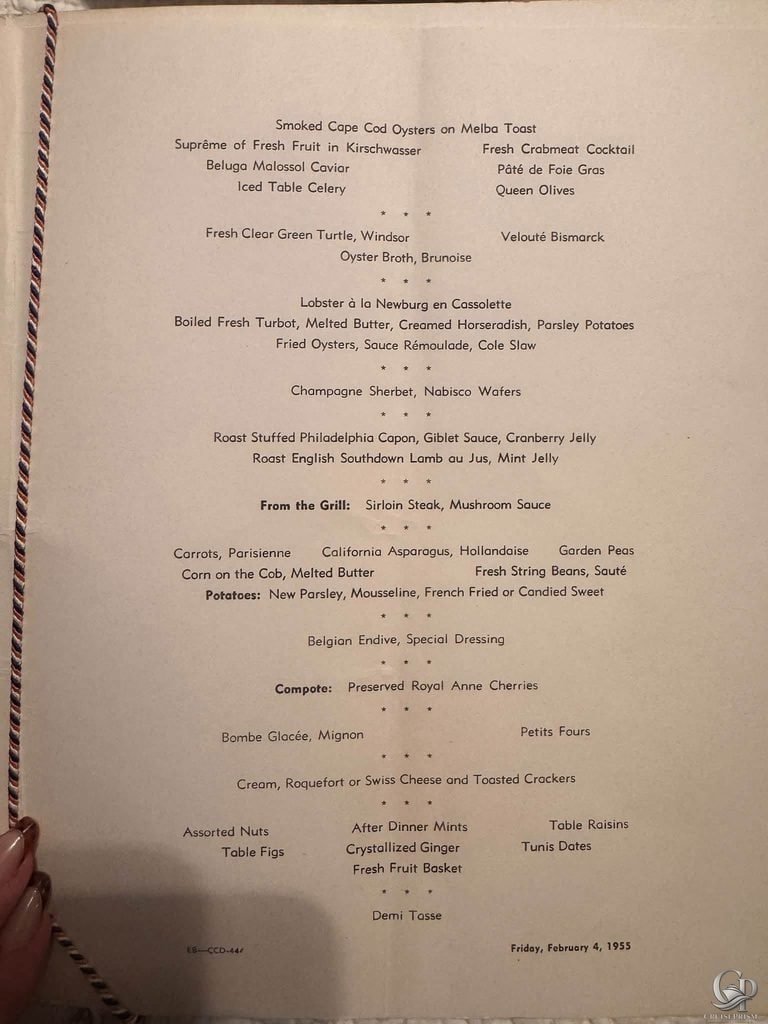
The third photograph shows an earlier menu dated Friday, February 4, 1955.
This particular date is also documented in historical maritime menu collections as an SS United States gala dinner.
Although the overall menu structure resembles the 1956 example, the individual dishes reveal some interesting differences.
Appetizers and Soups
The opening selections included:
- Smoked Cape Cod Oysters on Melba Toast
- Suprême of Fresh Fruit in Kirschwasser
- Beluga Malossol Caviar
- Fresh Crabmeat Cocktail
- Pâté de Foie Gras
- Fresh Clear Green Turtle Soup, Windsor
- Oyster Broth, Brunoise
- Velouté Bismarck
Beluga caviar, foie gras, and fresh seafood were prominent ingredients, reflecting the emphasis on luxurious dining.
Velouté Bismarck is especially interesting because the ship’s head chef was Otto Bismarck, whose name appeared on several recipes developed for the vessel.
Seafood and Main Courses
The 1955 menu offered several distinctive preparations:
- Lobster à la Newburg en Cassolette
- Boiled Fresh Turbot with Creamed Horseradish
- Fried Oysters with Sauce Rémoulade
- Roast Stuffed Philadelphia Capon
- Roast English Southdown Lamb au Jus
- Sirloin Steak with Mushroom Sauce
Lobster Newburg, a rich seafood preparation traditionally made with a creamy sauce, was a particularly fitting selection for a formal ocean liner dinner.
The menu also included champagne sherbet, vegetables, salads, and a generous selection of desserts.
Desserts and Final Courses
Passengers could finish their meals with:
- Preserved Royal Anne Cherries
- Bombe Glacée Mignon
- Petits Fours
- Roquefort or Swiss Cheese with Toasted Crackers
- Assorted Nuts and Table Figs
- Crystallized Ginger and Tunis Dates
- Fresh Fruit Basket
- Demi-Tasse Coffee
The menu’s decorative red, white, and blue cord is another attractive detail, reflecting the patriotic identity associated with the SS United States.
What Made Dining Aboard the SS United States So Extraordinary?
The ship’s culinary operation was far more sophisticated than simply serving passengers three meals a day.
Under the supervision of head chef Otto Bismarck, the SS United States developed a reputation for extensive menus and international cuisine.
Bismarck had trained in European hotels and brought traditional continental cooking techniques to the ship.
Historical records preserved by the SS United States Conservancy reveal that the menus combined French, Italian, Spanish, Indian, Mexican, and American culinary influences.
The ship also operated with advanced kitchen equipment for its time, combining traditional preparation methods with modern technology.
One particularly interesting detail is that passengers across the ship’s three classes enjoyed many similar dishes.
While dining rooms and service standards differed, the culinary selections were not necessarily exclusive to First Class.
The three original photographs do not independently identify the passenger class associated with each menu, so their exact dining room assignments should not be assumed.
Gala Night: A Grand Ocean Liner Tradition
One of the most memorable dining traditions aboard the SS United States was Gala Night.
According to historical accounts collected by the SS United States Conservancy, these celebrations took place on the final evening of a voyage.
Passengers dressed in their finest clothing, and the atmosphere became festive with streamers, party hats, and special menus.
For many travelers, Gala Night was a highlight of the crossing.
The occasion represented something that modern cruising still celebrates through elegant evenings and special dining events, although the atmosphere and traditions have changed considerably.
The printed gala menus were part of the experience. Their elegant presentation encouraged passengers to preserve them as souvenirs.
Today, these surviving documents provide a direct connection to the ship’s passenger experience.
Comparing SS United States Dining in 1955 and 1956
Looking at the two dated menus side by side reveals how consistent the ship’s culinary standards remained during the mid-1950s.
Several dishes appear on both menus, including:
- Beluga Malossol Caviar
- Fresh Crabmeat Cocktail
- Pâté de Foie Gras
- Fresh Turbot
- Roast Stuffed Philadelphia Capon
- Champagne Sherbet
- Preserved Royal Anne Cherries
- Bombe Glacée Mignon
However, there are also noticeable differences.
The February 1955 menu features Lobster à la Newburg, fried oysters, and oyster broth, while the March 1956 menu includes kangaroo tail soup, fried baby lobster tails, and roast leg and saddle of lamb.
These variations demonstrate the diversity of dishes offered aboard the ship while preserving a recognizable formal dining structure.
Another interesting detail is the extensive selection of vegetables, cheeses, fruits, and sweets.
Modern cruise passengers may recognize some of the dishes, but the sheer number of individual accompaniments and final courses makes these menus particularly distinctive.
How SS United States Dining Compares With Modern Cruise Ships
Although modern cruise ships offer an enormous variety of dining experiences, the approach is quite different from what passengers encountered aboard the SS United States.
Today, travelers may choose between main dining rooms, buffets, casual venues, and specialty restaurants.
The 1950s ocean liner experience placed greater emphasis on traditional multicourse dining, with an extensive selection of dishes presented within a formal meal.
Some notable differences include:
- Formal dining traditions: Gala dinners and elegant attire were important elements of transatlantic travel.
- Extensive menus: Passengers could choose from numerous seafood, meat, vegetable, and dessert preparations.
- Traditional European cuisine: French culinary terminology appeared throughout the menus.
- Unusual historical dishes: Kangaroo tail soup and green turtle soup were among the specialties served aboard the vessel.
- Printed souvenirs: Menus were often carefully preserved as reminders of a memorable voyage.
While the modern cruise industry offers more flexible dining arrangements, these historical menus demonstrate the remarkable attention given to food aboard one of the world’s most famous ocean liners.
Why These Original SS United States Menus Are Important
The SS United States completed her final commercial voyage in 1969, bringing an end to an extraordinary chapter in American maritime history.
Although much attention is understandably focused on the ship’s speed, engineering, and transatlantic records, original passenger memorabilia tells another important part of her story.
These menus reveal what everyday luxury looked like aboard the vessel.
They show the dishes passengers could select, the culinary influences of the period, and the elaborate presentation associated with formal ocean liner dining.
They also provide a fascinating comparison with modern cruise ship menus, illustrating how dining preferences and onboard experiences have evolved over the decades.
For maritime enthusiasts and collectors, original SS United States menus are valuable historical documents that preserve a small but memorable part of life aboard America’s legendary ocean liner.
Frequently Asked Questions About SS United States Dining
What food was served aboard the SS United States?
The ship offered a wide selection of international cuisine, including caviar, lobster, oysters, fresh fish, roasted meats, vegetables, French-inspired dishes, pastries, cheeses, and elaborate desserts.
Did the SS United States have gala dinners?
Yes. Gala Night was a traditional celebration held toward the end of a transatlantic crossing, featuring elegant attire, festive decorations, and special menus.
Who was the head chef aboard the SS United States?
Otto Bismarck served as the ship’s head chef throughout its commercial service. His culinary background helped establish the vessel’s reputation for international cuisine.
Did Tourist Class passengers receive the same food as First Class passengers?
Historical records indicate that many dishes were similar across First Class, Cabin Class, and Tourist Class. Differences were primarily associated with dining room surroundings, presentation, and service.
Why did the SS United States serve kangaroo tail soup?
Kangaroo tail soup was a historical specialty associated with the ship’s gala dining tradition. The SS United States Conservancy documents that kangaroo tails were imported frozen from New Zealand for preparation aboard the vessel.
What are the dates of these original menus?
The two photographed dinner menus are dated February 4, 1955, and March 17, 1956. The separate gala dinner cover does not display a date.
Why does the gala dinner cover mention advancing clocks by 90 minutes?
Passengers traveling eastward across the Atlantic adjusted their clocks during the voyage to account for changing time zones. The cover instructs passengers to advance their clocks by 90 minutes that evening.
Are original SS United States menus collectible?
Yes. Historical ocean liner menus are collected as maritime memorabilia, particularly examples associated with famous vessels, notable voyages, and special dining occasions.

Conclusion
These original SS United States gala dinner menus from 1955 and 1956 offer an extraordinary look at luxury dining during the golden age of transatlantic travel.
From Beluga caviar and Lobster Newburg to kangaroo tail soup and elaborate French desserts, the menus demonstrate the remarkable culinary variety available aboard America’s fastest ocean liner.
More than simply lists of food, they are surviving pieces of maritime history that capture the elegance, traditions, and atmosphere of an era when crossing the Atlantic was an unforgettable experience.
For anyone fascinated by the SS United States, historic ocean liners, or the evolution of cruise ship dining, these menus provide a rare opportunity to discover what it was like to dine aboard one of the most celebrated passenger ships ever built.