Cunard Cruise Disembarkation in Miami: U.S. Customs Allowances and Restrictions
Disembarking from a Cunard cruise in Miami involves more than collecting luggage and leaving the ship. Passengers returning to the United States may be subject to customs inspections, declaration requirements, and restrictions on items brought ashore.
An original Cunard disembarkation information sheet provides a useful example of the guidance passengers may receive before arriving at PortMiami. The document outlines customs allowances for U.S. citizens and non-U.S. citizens, restrictions on food products, and where guests can seek assistance before leaving the ship.
This guide examines the information shown in the original document, explains what passengers should understand about U.S. customs procedures, and highlights why current government regulations should always be checked before traveling.
CruisePrism readers planning a Cunard sailing can also explore our Cunard drink prices and bar menus, Cunard restaurant menus, and Cunard Onboard Guides for more information about dining, drinks, entertainment and onboard activities.
Original Cunard Disembarkation and Customs Information
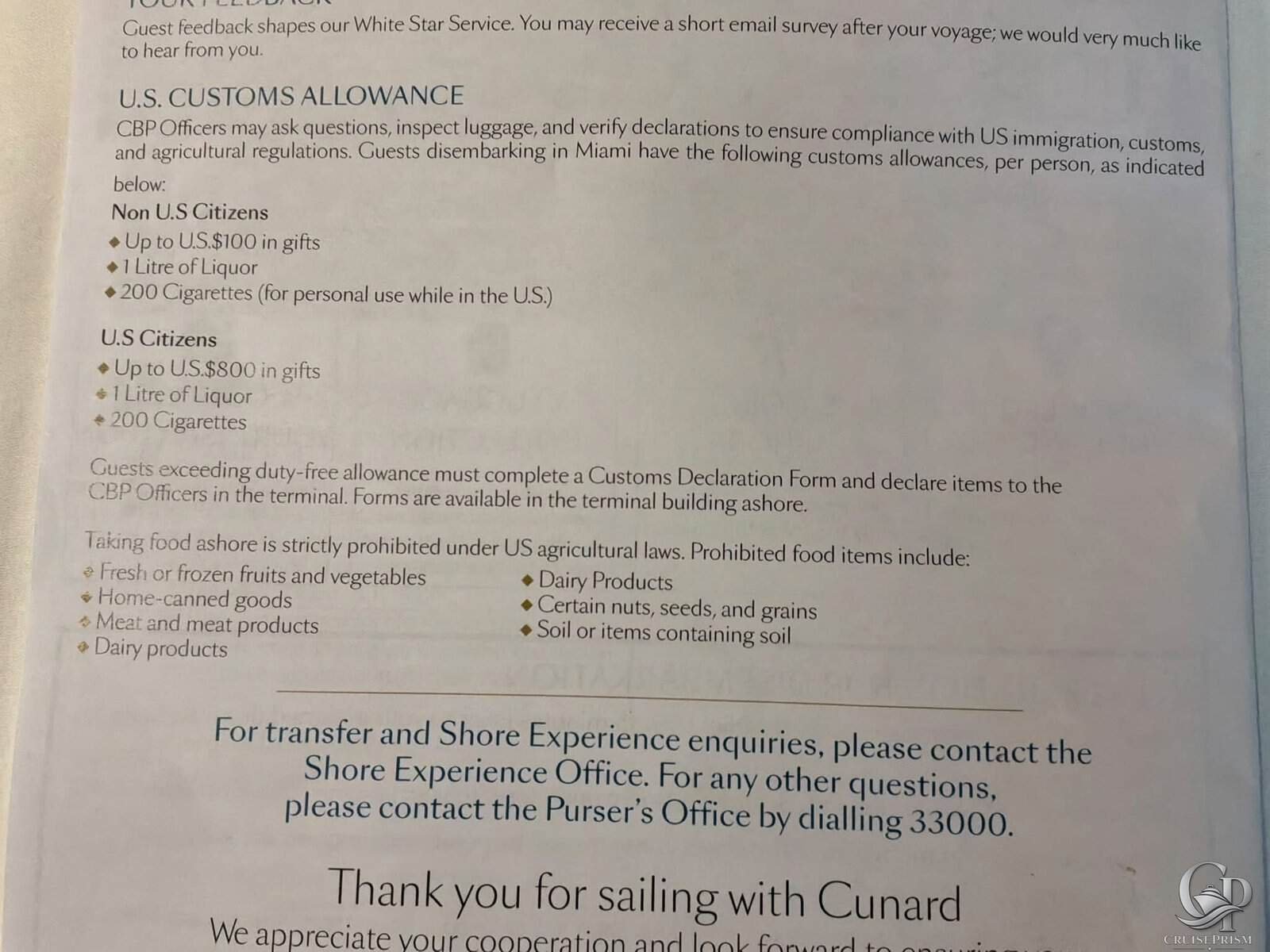
The photographed document is part of Cunard’s passenger information for disembarkation in Miami. It focuses on U.S. customs procedures rather than providing a complete schedule for leaving the ship.
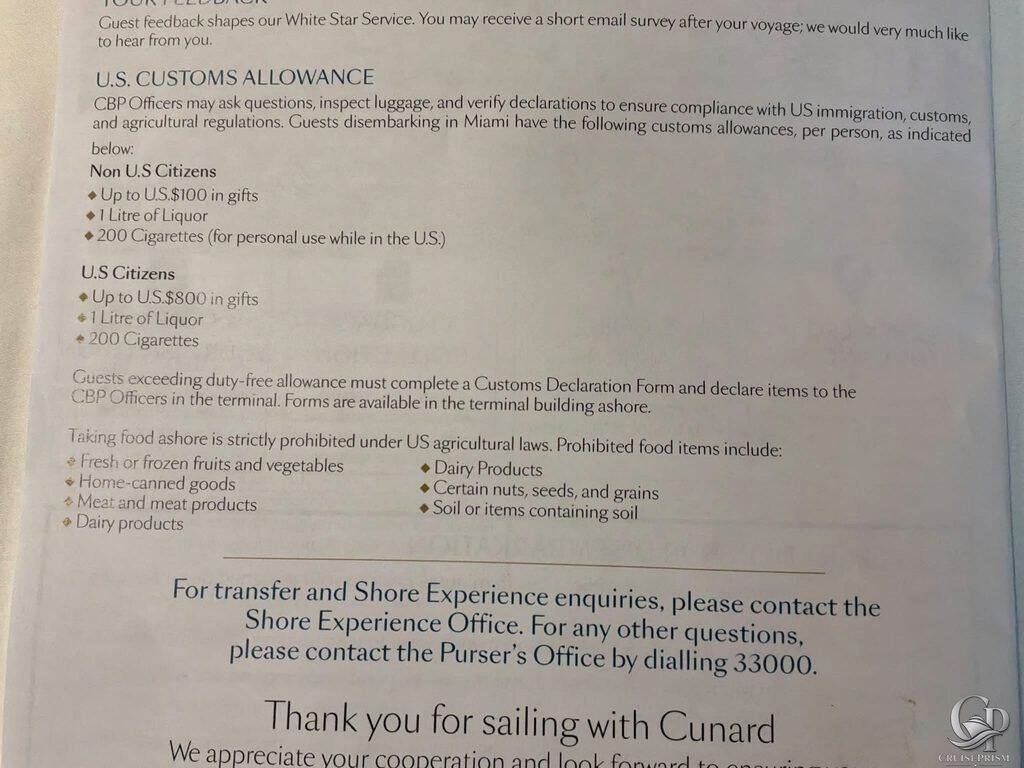
The document identifies several important subjects:
- Customs allowances for U.S. citizens and non-U.S. citizens.
- Alcohol and tobacco allowances.
- Declaration requirements for goods exceeding duty-free limits.
- Food and agricultural products restricted from entering the United States.
- Assistance available through Cunard’s onboard offices.
The photograph does not identify the specific Cunard ship, sailing date, or complete itinerary. Consequently, the information should be treated as an example of Cunard’s passenger guidance rather than documentation of a particular voyage.
U.S. Customs Allowances Listed in the Cunard Document
One of the main sections is titled “U.S. Customs Allowance.”
It explains that U.S. Customs and Border Protection (CBP) officers may question passengers, inspect luggage, and verify declarations to ensure compliance with immigration, customs, and agricultural regulations.
The document provides separate allowance categories for U.S. citizens and non-U.S. citizens.
Allowances Listed for U.S. Citizens
According to the photographed Cunard information sheet, the listed allowances were:
- Up to US$800 in gifts.
- One liter of liquor.
- 200 cigarettes.
Allowances Listed for Non-U.S. Citizens
The document separately lists:
- Up to US$100 in gifts.
- One liter of liquor.
- 200 cigarettes for personal use while in the United States.
These figures reproduce the allowances printed in the Cunard document. They should not be interpreted as universal or current customs entitlements.
Actual duty-free exemptions depend on factors including residency, travel circumstances, the type of merchandise, and applicable customs rules. Citizenship alone does not establish every passenger’s allowance.
Passengers should confirm their applicable exemptions with U.S. Customs and Border Protection before traveling.
Declaring Purchases After a Cunard Cruise
Shopping is a common part of the cruise experience, whether passengers purchase souvenirs during shore excursions or merchandise aboard the ship.
The Cunard document instructs passengers exceeding their duty-free allowances to complete a customs declaration and report the relevant items to CBP officers in the terminal.
It also states that declaration forms were available inside the terminal building.
However, customs processing methods can change, and a paper declaration form may not be required for every passenger.
The important distinction is that purchasing an item duty-free aboard a cruise ship does not automatically exempt that item from U.S. customs requirements.
Passengers should be prepared to accurately declare merchandise when required, including purchases made during the cruise.
Food Restrictions When Disembarking in Miami
Another prominent section of the Cunard information sheet addresses agricultural restrictions.
The document warns passengers against bringing food ashore and identifies several categories of prohibited or restricted products.
Examples listed include:
- Fresh or frozen fruits and vegetables.
- Home-canned goods.
- Meat and meat products.
- Dairy products.
- Certain nuts, seeds, and grains.
- Soil or items containing soil.
These restrictions are particularly relevant to cruise passengers who may have snacks, fruit, or other food remaining in their bags after the voyage.
U.S. agricultural import rules are intended to reduce the introduction of pests, plant diseases, and animal diseases.
Not every food product is automatically prohibited under current U.S. law. Admissibility depends on the product, its origin, and applicable regulations.
Passengers should declare agricultural products when required and follow CBP and U.S. Department of Agriculture guidance rather than assuming that packaged or previously purchased food is permitted.
Cunard’s Shore Experience and Purser’s Office
The original information sheet also explains where passengers could obtain assistance before disembarkation.
For questions about transfers and shore experiences, guests were directed to the Shore Experience Office.
For other questions, the document directed passengers to the Purser’s Office, accessible by dialing 33000.
This telephone number appears in the photographed document and should not be assumed to apply to every Cunard ship or sailing.
Passengers arranging transportation after a cruise may find it useful to confirm their transfer instructions before the final morning.
Likewise, questions involving onboard accounts, documentation, or other departure arrangements should be addressed through the appropriate guest services staff.
Cunard’s White Star Service and Guest Feedback
The upper portion of the photographed page includes a brief section about guest feedback.
Cunard explains that passenger feedback helps shape its White Star Service and indicates that guests may receive a short email survey following their voyage.
White Star Service is Cunard’s name for its onboard hospitality approach.
The inclusion of this section illustrates how Cunard’s departure communications can combine practical customs information with final reminders about the passenger experience.
The document closes with a message thanking guests for sailing with Cunard.
Practical Tips for Disembarking From a Cunard Cruise in Miami
Although the photograph does not show luggage collection times, departure groups, or terminal assignments, it highlights several useful preparations for passengers approaching the end of a cruise.
- Review the customs rules applicable to your residency and travel circumstances.
- Keep records of purchases that may need to be declared.
- Check whether food or agricultural products in your luggage are permitted.
- Have your required travel documents accessible.
- Confirm transportation arrangements before leaving the ship.
- Follow instructions issued by Cunard and local authorities.
These preparations can help passengers avoid unnecessary complications when returning to the United States.
Frequently Asked Questions About Cunard Disembarkation in Miami
Do Cunard passengers go through U.S. customs in Miami?
Passengers disembarking in Miami are subject to applicable U.S. entry and customs procedures. CBP officers may inspect luggage, ask questions, and verify declarations.
How much can passengers bring into the United States duty-free?
The photographed Cunard document lists US$800 in gifts for U.S. citizens and US$100 for non-U.S. citizens. These are historical document figures, not a universal statement of current exemptions. Actual allowances depend on the passenger’s circumstances and current regulations.
Can passengers bring alcohol home after a Cunard cruise?
The document lists a one-liter liquor allowance in both passenger categories. Current eligibility, duty exemptions, and additional restrictions should be checked before traveling.
Can passengers take food off a Cunard cruise ship in Miami?
The document warns against taking food ashore and specifically identifies fruits, vegetables, meats, dairy products, and certain agricultural products. Current admissibility depends on the item and applicable U.S. regulations.
Does Cunard provide assistance with transfers?
The photographed document directs transfer and Shore Experience inquiries to the onboard Shore Experience Office. Available services and arrangements may vary by sailing.
Which Cunard ship issued this document?
The photograph identifies Cunard but does not show a specific ship name. It cannot reliably be attributed to Queen Mary 2, Queen Victoria, Queen Elizabeth, or Queen Anne from the visible information alone.
Is this Cunard customs document still valid?
It provides a useful example of passenger instructions, but its publication date is not visible. Customs allowances and processing procedures should be verified using current U.S. government guidance.
Conclusion
This original Cunard disembarkation document offers a practical look at the customs information provided to cruise passengers arriving in Miami.
Its emphasis on duty-free allowances, declarations, agricultural restrictions, and onboard assistance reflects the preparations involved in completing a cruise and returning to the United States.
For travelers planning a Cunard voyage, the document is a helpful reference for understanding the types of instructions that may be distributed before disembarkation. However, passengers should always rely on current Cunard communications and official U.S. customs regulations for the requirements applicable to their own sailing.